顯示具有 影像 標籤的文章。 顯示所有文章

2025年6月6日

笆札筏的大洪水 The Great Deluge: Oral History from Pacavalj


2025,單頻道彩色影片18分57秒,展出與委託製作於 如果我們的語言是……
Video 18" 57', artwork commissioned by "Sounds of Babe"
2024,十字繡於棉布上Cross-stitch on cotton cloth, 12 cm x 1500 cm

1935 年小川尚義、淺井惠倫以萬國發音記號、日語標注的合著《原語による高砂族傳說集(原語實錄臺灣高砂族傳說集)》,其中一篇採集自 Pacavalj(現台東大武鄉大鳥村)的傳說;講述一對兄妹在遭遇大洪水滅村之後努力存活下來並以亂倫婚姻來延續後代,從近親生產出殘缺的子孫,慢慢到幾世代後漸漸形成一個正常人類的聚落,也是部落的起源。這個敘事採集我的故鄉,後代在2011年為此故事製作繪本,並重新以自己的排灣族語講述這個故事。對於上述諸多語言翻轉的狀態感到有趣,我特地拜訪一群研究南島語的朋友為我解讀《原語による高砂族傳說集》,也近一步探究他們如何將被判定為死語的西拉雅語,如何透過參考《諸羅縣志》(1717)或對照《新港語馬太福音》(1888)去解碼及復活發音系統。

In 1935, OGAWA Naoyoshi and ASAI Erin published ‘A Collection of Formosan Aboriginal Folktales in the Original Language’, employing the International Phonetic Alphabet (IPA) alongside Japanese annotations. One tale recorded from the Pacavalj tribe (present-day Daniao, Dawu Township, Taitung County). It recounts how a brother and sister survived after their village was destroyed by a great flood. They sustained their lineage through an incestuous union, producing deformed offspring from this close kinship. Over several generations, these descendants gradually evolved into a community of normal humans, marking the tribe's origin. This narrative was collected in my homeland. Later generations produced a picture book based on this story in 2011, retelling it in their own Paiwan language.

Intrigued by these linguistic transformations, I sought out scholars specialising in Austronesian languages to decipher ‘A Collection of Formosan Aboriginal Folktales in the Original Language.’ This led me to explore how they decoded and revived the pronunciation system of Siraya—a language deemed extinct—by referencing the ‘Zhuluo County Annals (1717)’ and cross-referencing with "The Gospel of St. Matthew in Formosan, Sinkang Dialect) (1888) to decode and revive its phonetic system.

2022年1月14日

不只是恩光書局 Not just the Uriah Bookstore

2011、2022,老照片與老文件一批、單頻道彩色影片五件:4分鐘 (2022)、2分33秒、1分36秒、3分58秒與2分33秒。展出於「另一座板塊」,台東美術館。
2011, 2022, old photos, old documentation, 5 videos, 4” (2022), 2” 33’, 1”36’ , 3”58’, 2” 33’. At 2022, "Another Continent", Taitung Art Museum, Taiwan.


我的父親張威良是1949年從中國播遷來台灣的“外省人”,落腳並成家立業在原住民生活領域,也留下大批1960年代在台東大武鄉拍攝的老照片。我從中探索他眼中的景物,幾乎沒有生活密切的原住民身影,滿是對現代化建設的興趣,在過往與今日交錯的影像中略整理家族史,也一窺戰後的南迴地誌。

My father, William Chang, was a new immigrant from China who came to Taiwan in 1949 and started his family in Dawu Township, Taitung County, a Paiwanese area where most of the indigenous people of live. William's hobby was photography, and he left many records of his life in the 1960's. I explored the landscape through his eyes, indigenous people not there, but full of interest in the construction of modernization. I was able to organize my family's history in the intertwined images of the past and present, and to glimpse the post-war topographic  of South Taitung.

2021年10月14日

園區/生活・家屋/蝸牛 Cultural Park / Life・Traditional Dwelling / Snail


園區/生活・家屋/蝸牛(2021)彩色單頻道影片,8分7秒(現地製作)
 "Cultural Park / Life・Traditional Dwelling / Snail "(2021) , video, 8"7'  (made in situ).

張恩滿+Sedjam Takivan Kavunga
駐園計劃(攝影芮斯影像,原住民族文化發展中心提供)
En-Man Chang+Sedjam Takivan Kavunga
Residency Program, image courtesy of the
Indigenous Peoples Cultural Development Center (Taiwan), photo by ReMix. )

台灣原住民族文化園區作為匯集島內正名16族族群文化展示與推廣的場域,在諾大半山園打造一棟棟各個部落的傳統建築與家屋。短期進駐的藝術家如何去思考與空間的關係?身為溯源血脈的一員,在對空間感到陌生與距離的實在感受下,邀請擁有老人靈魂的排灣族文化青年Sedjam Takivan Kavunga(漢名林志祥,台東pacavalj部落)合作,實際生活在園區,於完美建物裡呈現某種開墾狀態;他熟嫻各項傳統文化與知識,我以蝸牛系列創作為介面,在擬態的場所棲居活動,討論傳統意義中的日常,實踐家屋意象與時空場景的縫合。

當裊裊炊煙升起,代表人/生命在建物裡活動,是傳統意義上重要的生活象徵,以生活的痕跡去呈現空間性的轉換。Sedjam在模擬的傳統家屋開啟的日常生活,展演期間他也不時出現於展場/家屋,與〈蝸牛〉系列展開對話。

The Taiwan Indigenous Peoples Cultural Park, as a venue for the exhibition and promotion of the cultures of the 16 ethnic groups on the island, has created a series of traditional buildings and houses of each tribe in the vast Mid-Levels Park. How do short-term artists think about relationship with the space? As a member of the traceability lineage, I invited Sedjam Takivan Kavunga (Chinese name Lin Chih Hsiang, Taitung pacavalj tribe), a young Paiwanese cultural youth who possesses the soul of an old man, to collaborate with me, as I actually live in the park, and present a certain kind of reclamation state in the perfect building; he is well versed in various traditional cultures and knowledge, and I have used the Snail series as an interface for inhabiting and moving about in an imaginary place, discussing everyday life in the traditional sense, and practicing the seamlessness between the imagery of the house and the spatial and temporal scenes in the imagery of the house.

When the smoke rises, it represents the movement of life in the building, an important symbol of life in the traditional sense, and the traces of life are used to present the transformation of spatiality. Sedjam's daily life in the simulated traditional house, and his frequent appearances in the exhibition venue/house during the exhibition, are a dialogue with the "Snails" series.

2021年7月16日

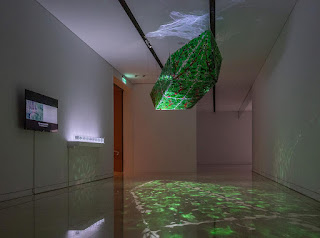
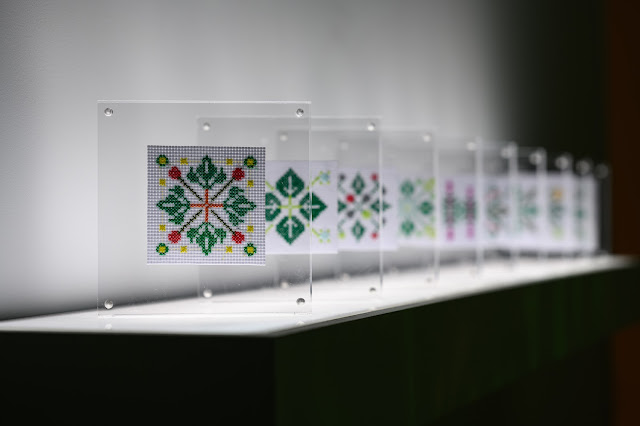
蝸牛樂園三部曲-啟航或終章 Snail Paradise Trilogy: Setting Sail or Final Chapter


高雄市立美術館提供,攝影林宏龍 Courtesy of the KMFA

2021, 花船彩繪 50x100x400cm,單頻道彩色影片 14分35秒,刺繡含框16cmx16cmx2cmX9組。展出於2021年《泛.南.島藝術祭》,高雄市立美術館。2021, Flower boat painting 50x100x400cm, video 14 "35', embroidery with frame 16cmx16cmx2cmX9 sets. At 2021 "Pan-Austro-Nesian Arts Festival", Kaohsiung Museum of Fine Ars.

英國植物學家約瑟夫.班克斯爵士(Sir Joseph Banks,1743-1820)隨著庫克船長展開殖民探勘的冒險旅程,每趟歸國都帶回豐碩採集成果,成就皇家植物園的奇遊景觀。大航海時代開啟了各地物種的大交換,也造就疾病與生存競爭的紛擾。原生於東非的非洲大蝸牛隨著洋流擴展,成為世界百大入侵物種;回溯牠的散播途徑,恰似帝國擴張的路徑;1933年日本殖民政府官員從新加坡引進臺灣發展食用養殖,牠難以處理的黏液,台灣原生種構樹的葉子卻能輕易去除,而構樹是科學家以它的基因佐證台灣是南島語族的起源,南島語系最西的馬達加斯加又鄰近東非-非洲大蝸牛的起源地。這來來回回的交錯在歷史疊層裡,再從族人的蝸牛料理相關的食材植物們,感受到錯綜複雜的交流網絡,將一路認識的它們轉為刺繡圖騰,試圖留下給未來的「傳統」採樣。我想攜帶與蝸牛料理相關植物的圖案,像是要去為蝸牛尋根,航向「人類起源非洲說」的想像去吟唱。


With Captain Cook, Sir Joseph Banks (1743-1820) embarked on a colonial exploration adventure, bringing back fruitful collections on each return trip and making the Royal Botanic Gardens a wondrous sight. The age of great voyages opened up a great exchange of species from all over the world, but also created the disturbance of disease and competition for survival. The African snail, native to East Africa, expanded with ocean currents and became one of the top 100 invasive species in the world; its dispersal path was similar to the path of imperial expansion; in 1933, Japanese colonial government officials introduced it from Singapore to Taiwan to develop food farming, and its difficult to handle mucus was easily removed by the leaves of Taiwan's native species, the structural tree, and scientists used its genes to prove that Taiwan is the origin of the South Island language group, and the South Island The westernmost part of the South Island language family, Madagascar, is near the origin of the East African snails. In this back-and-forth history, we can feel the intricate network of communication through the snail cooking-related ingredients and plants of the tribe, and turn them into embroidery totems, trying to leave a sample of "tradition" for the future. I want to carry the patterns of plants related to snail cuisine, as if I were going to search for the roots of snails and sing to the imagination of the "African origin of mankind".


高雄市立美術館提供 Courtesy of the KMFA


2020年5月14日

眺島 Milky way

影片截圖 Screenshots 

花窗彩繪攝影曾能章 stained glass, photo by ZENG, Neng-Jhang

2020 / 單頻道彩色影片8分15秒、花窗彩繪(450x250cm)
展出於2020綠島人權藝術季 ,《如果,在邊緣,畫一個座標》
2020 / video (single channel, 8' 15"), stained glass (450x250cm)
At "If on the margin, draw a coordinate", 2020 Green Island Human Rights Art Festival

火燒島、大島與蘭嶼島,它們鄰近可以彼此眺望, 在有意識與無意識被禁錮中,平行乘載歷史之業。回首洋流,浪頭隨潮波, 仰望同個星空,藉由希拉女神的乳汁連結跳島,連結政治治理下的分裂時空。

Fire-licked Island, Main Island and Orchid Island are so close geographically that they are within one another’s sight. In the fell clutch of circumstance, whether self-imposed or involuntary, they share a turbulent history. Apart from looking back at the ocean current and the crest of tidal waves, they look up at the same starry sky. I plan to associate Hera’s breast milk with island-hopping, with the split space-time under political governance. ( Translations by 2020 Green Island Human Rights Art Festival)

2019年11月22日

蝸牛樂園 Snail Paradise (2019)


刺繡屏風 300x200cm,食譜,影像
2019, Site-specific installation: videography, embroidery and recipes, dimensions variable
Singapore Biennale 2019 commission (Images courtesy of the SB)

“How to make a snail food?”
這句子是軸心,不僅僅是cook更是make,去進行一個製圖(mapping)工作;審視與逆返非洲大蝸牛的遷徙途徑,試圖描繪出牠們的生態歷史的大航海時代。

非洲大蝸牛原生於東非,1933年日本殖民政府官員從新加坡引進臺灣發展食用養殖。這雨後會出現在路邊的生物,在相近的時期分別侵入夏威夷群島、印尼、北婆羅洲、馬來半島等地。這些地區共同經驗了帝國傳播拖曳的痕跡,轉化出了不同的自我文化的發展。

蝸牛成為探討介面,去思考各地方文化的混雜性;啟航至作為轉運站的新加坡,與當地藝術家合作,探索蝸牛作為各種食譜成分的態度,成就一個研究進程不斷累積的食景圖譜。

 又該如何思考食景地圖的繪製?「Map」詞源於拉丁文「Mappamundi」,原始語意是「將世界繪在布上」。應用台灣原住民族於傳統服上的刺繡方法,以針代筆、以線代墨的針路書寫去探究;而「針路」又指稱為「航道」,蝸牛是這計畫的指南針。


“How to make a snail food?”
This sentence is the axis, not only to cook but more to make, of this mapping project. Reviewing and rewinding the migration route of the Africa Land snail (Achatina fulica), I attempt to portray their Age of Discovery in ecological history.

The Africa Land snail has its origin in East Africa; it was introduced to Taiwan from Singapore by a government official during the Japanese colonial period in 1933 for the purpose of food farming. This creature that appears after rain separately invaded Hawaiian Islands, Indonesia, North Borneo, Malay Peninsula, etc. at similar times. These regions shared the experience of empire’s spreading and dragging, while transformed to one’s own cultural development.

The snail has become a discussion interface to think about the hybridity of local cultures; set sail to Singapore, collaborating with local artists to explore attitudes towards the snail as an ingredient in a range of recipes, and achieve an accumulating map of foodscape during the research process.

How to think about mapping a cookbook? “Map” original came from “Mappamundi” in Latin, which means “draw the world on a cloth.” I will apply the embroidery of Taiwan indigenous  on traditional costume while using needle as pen, sewing as ink to write and to research; As “needle road” implies the “seaway  map,”  snail is the compass in this project. (Most translations by  San-San Liu)


群島資料庫10(與新加坡藝術家ila以及 Kin Chui的訪談與食譜)
NUSANTARA ARCHIVE 10 (Interview with Singaporean artists ila and Kin Chui, and who make the snail recipes)

食譜下載
 Snail recipes download


2019年7月20日

蝸牛樂園-前導篇 Snail Paradise: Preface


2019, 複合媒材,影像3分25秒,三組傳統男子刺繡後敞褲片,尺寸依場地。
展出於「留洋四鏢客」,TKG+,內湖,台北。
2019, mixed media, video 3' 25", 3 traditional men's rear open pants with embroidery, dimensions variable. At “The Middleman, the Backpacker, the Alien Species, and the Time Traveler”, TKG+, Taipei, Taiwan. (Courtesy of TKG+)

當非洲大蝸牛出現在台灣本地熱炒料理“炒螺肉”,成為熱門下酒菜,尤其受台灣原住民族族人的歡迎,甚至納入珍貴的傳統食物裡;牠似乎出乎1933年
引入食用養殖日殖官員的預料之外,且台灣的原生物種構樹葉子能夠輕易地去除牠的黏液。

通過非洲大蝸牛行走遺留的黏液,
逆返審視牠的傳播路徑(台灣→新加坡→東非),探詢它拖曳過的痕跡;先是作為轉運站的新加坡,與對牠原生地非洲的想像,做一「啟航」的宣示。此蝸牛旅程系列「前導篇」,借用了母親家鄉「大鳥部落」(pacavalj)男子傳統服褲片的樣式,設計了與蝸牛料理有關的植物轉為刺繡圖騰,用此形式書寫地方或世界的一段歷史。

It must not have been foreseen that the African snails became a very popular dish usually enjoyed with beer in Taiwanese stir fry restaurants and also a precious traditional dish among indigenous group of people when they were introduced to Taiwan in 1933 by Japanese officials.  
Moreover, leaves of the local common paper mulberry could be used to remove its trail easily.


By the trail left along the way, the artist examines African snail's dissemination route in reverse from Taiwan to Singapore and then back to East Africa. The preface of the journey depicted in this project presents a period of local and international history on embroideries rendering the plants relate to the snail dishes. The patterns are designed by the artist out of male pants from Pacavali, a tribe where the artist's mother originated. (Translated by Chun-Ying Lin)

2016年11月23日

重如鴻毛 As Heavy as a Feather

影片擷圖 (Aerial Photography Vikung Lalengeang)

重如鴻毛影像裝置,依場地大小,2016
風箏投影13分45秒
主影像,42分48秒
重如鴻毛〈小豆篇〉,29分44秒

「重如鴻毛」典故出自西元前兩百年的中國諺語「重於泰山,輕於鴻毛」,論人們如何看待生存並活出自己的價值;這裡將語意重組,藉由反常的量感,探究渺小的對象其生命的重量,並通過影像描繪出某種抽象的力量,企圖展開別於單一資本體系價值的想像。位於台灣台東的杉原海灣,在阿美族的傳統地名是 fudafudak,為閃閃發光之意,也是緊鄰的小部落的名稱。fudafudak 就如同許多偏鄉地區,面臨青壯人口外流與文化流失等問題;而這個不起眼小村莊的自然生活領域,有許多大型開發案正虎視眈眈的包圍著。跟著從事部落文化重建工作的社會運動者進入部落,藝術家藉由加拿大展覽機會,與族人展開了合作項目;製作與重現傳說中會發出聲響的大風箏,並在其中談及長老兒時記憶中的傳奇走唱藝人 Ngayaw,以及傳唱他的歌。


"As Heavy as a Feather", Video installation, dimensions variable, 2016
Kite, bamboo, canvas, projection: 13’ 45”
“As Heavy as a Feather” Main video: 42' 48"
“As Heavy as a Feather” Chapter: Lin Dou: 29’ 44”

The allusion of “Heavy as a feather” is inspired from a Chinese idiom 200 B.C. ago: “The death may be heavier than Mount Tai but lighter than a feather.”  The original intention is to point out the way people value themselves and live out their lifes with own value in the limited lifetime.
Here the meaning is reconstructed by altering the sentence. From the inverse semantics, the artist tries to explore how people with tiny power value and look at their own lifes. By portraiting a kind of abstract power through video images, the artist intends to expand own imagination besides from a singular capitalism value.
Shanyuan Bay locates in Taitung county of Taiwan, its traditional name in Amis language is called Fudafudak, means “a glittering place”, it is also name of a small neighbourhood tribe. Same as many other remoted townships, Fudafudak is facing problems of outward migration and culture loss. Meantime, the natural living area of this tiny village is coveted by many large investors for land development project. By following social activists who work for native culture re-built, take advantage of opportunity to exhibit in Canada, the artist enters into the tribe and co-work with the natives: to produce and reappear the huge legendary sound kite. The video also features scenes that elders tell the story of legend Ngayaw from their childhood memories and sing the song of Ngayaw. (Translated by: Lucyann Tung)

2016年6月4日

馬賽克傳說─能盛興工廠初探 Legend of Pixelated - Preliminary research of Neng-Sheng-Xing Factory


Video, 21’ 45”, 2016
*本影像作品非經作者授權,不得任意轉載與公開播映。 Works without the author's authorization, shall not arbitrarily reprint and open broadcasting.

能盛興工廠位於台南,是一棟荒廢二十年的三層樓長屋,被一群年輕人整理翻修,成為他們實踐某些理想的基地,並對外開放做多元活動的場所。而空間與人密不可分,或因人而成就的空間是一個接一個的過渡,持續進行的有機狀態航向某個夢土,或心所嚮往的:烏托邦。

藝術家在能盛興工廠短期進駐的一個月裡製作影片,採訪女性成員們描述她們最喜愛的地方,穿插男性口白以一位虛構人物作串場。藉由身體實踐力十足的能盛興工廠成員,以及所連結的社群,淺談台灣近代藝術的發展脈絡,並對所謂的藝術圈做反身性思考。

Neng-Sheng-Xing Factory is located in Tainan, Taiwan. It’s used to be an abundant 3 levels building over than 20 years, now it’s not only a base of dream, but also a place with multi-activities to public after a group of young people refurbished it. The relationship between space and human is strongly related, a space formed by people are the continuously transitions. These transitions are leading with the organic status to a land of dreams or we can interpret it in a more specific definition: Utopia.

The female members described their favorite places when the artists filmed the interviews during the one-month term residency at Neng-Sheng-Xing Factory, they also mixed a male narration as imaginary character in the film. This video is trying to present the development and history of Taiwan Modern Art and offering a reflexivity thought to art circles by the team members of Neng-Sheng-Xing Factory’s practice force.  (Translator: Daphne San)

2015年11月13日

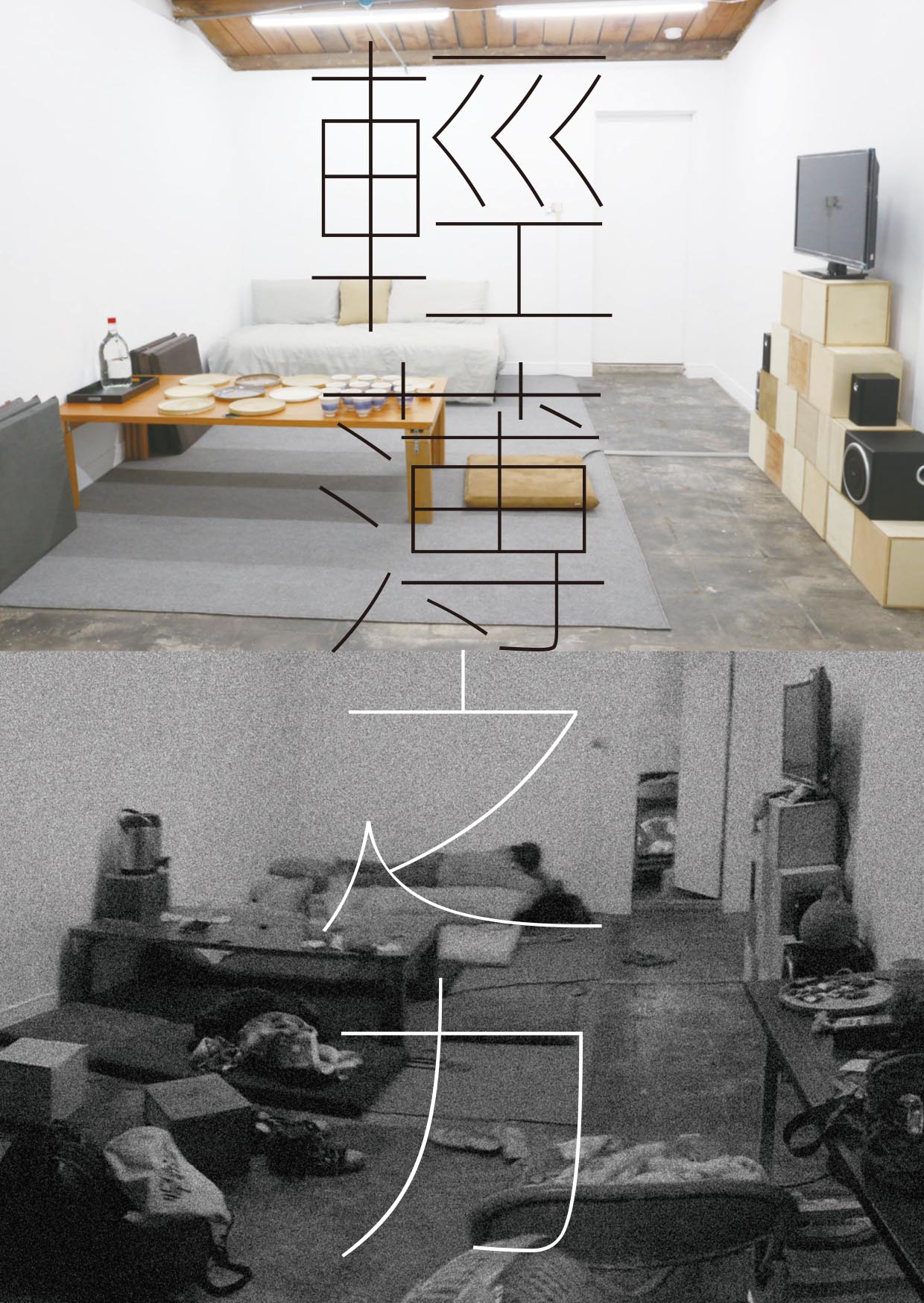
「輕薄之力」- 素人影像創作展


花蓮立霧工作室「藝術家作為「原」住民」駐村計畫

駐村期間2015年9月至2015年11月

在「藝術家作為『原』住民」計畫裡,一個駐村藝術家如何成為「居民」(resident)?這短暫的停留,頂多是長時間的旅居,即便是平行生活,仍舊是一個模擬的的姿態。但在這短暫的時間裡,如同我認為創作要擺脫那些資本意識、主流架構,在有限的資源裡,在陌生的環境裡,理出一個概略整體,開創出不同於既有脈絡的創造;非廣泛的做社區推動,而是在機緣下,或是在偶然的相逢裡,甚至是文化衝突裡產生新敘事。

在影像工作坊的第一天,其實展演就已經開始了。

2015年8月8日

快樂山 Happy Mountain


雙頻道影像,18分25秒,2015
*本影像作品非經作者授權,不得任意轉載與公開播映。 Works without the author's authorization, shall not arbitrarily reprint and open broadcasting.

在台灣東北角濱海公路某個隱匿入口,是地圖上找不到的快樂山,那兒居住著一群阿美族(Amis/Pangcah)老人,坐山面海的居住環境,有著絕佳的天然資源。他們上山採野菜、下海撈漁獲,且依著山坡道,用鐵皮或廢料板材搭出拼湊風格的各式建物,過著自給自足並互相照顧的生活近三十年。

城市外圍有許多像這樣的都市原住民部落,遷徙而來的成因絕大部分是因應早期城市建設,從花東地區而來的大批廉價勞動人力。這群離鄉背井的人們,在離工作就近處,聞嗅到像家鄉的地方,像是依循祖先的生存智慧,就這麼一個招喚著一個,群居了起來。而當台灣進入現代化後,土地已不是讓人可當過客暫駐的地方,而是成為國家財產或資本商品,那些逐水草而群居的天性就成了非法的賤民;快樂山的居民全部被提告「侵佔國土」,即將面對流離失所的命題。

從外部看來,那兒有著人與自然和諧相處的空間,自力更生的開拓美學,呈現出某種烏托邦的雛型,令人欽羨與嚮往。藝術家隨著事件,初步的進入村落,在詭譎多變的政治氛圍中縮時攝影24小時的取高風景,並在拍攝途中自拍自問自答,試圖尋找傳說中的美麗玻璃屋,並經驗著地方從內到外,像是地圖繪製的等高線,擴出一圈圈對「家」的探索取徑。


Happy Mountain, Video, Dual channel, 18' 25", installations, dimensions variable, 2015

The Happy Mountain is, by all practical accounts, invisible. Located around a seaside highway in northeast Taiwan, Happy Mountain doesn't have any visible mapping points. The people who live there are primarily elders of Amis (Pangcah), cohabiting with the natural environment and sustainably living off the rich resources found between the sea and mountains. They subsist off collecting wild vegetables and seafood, as well as building different types homes by collecting recycled construction materials for the last thirty years.

In Taiwan, many of the urban indigenous tribes are dotted around suburban areas of cities. The typical reason they came to live in these suburban areas —away from their hometowns such as Hualien and Taitung— was to make a better living wage as manual laborers, namely off of the early boom in urban construction. Due to nostalgia and  homesickness, these laborers gradually started to gather, one by one, in Happy Mountain due to its geographical similarity with their hometowns.

This type of movement is not unlike how their ancestors began to gather and live together in the past, forced on by the continued development of their country by outside occupation. After those major early develops waned in Taiwan, the land was no longer seen as belonging to these migrant laborers. Instead, the land came into the possession of the government and became just another piece of capital. Therefore, these laborers have now been deemed illegal occupants, treated without the proper respect, for their sacrifices and years of hard work for the collective good of Taiwan. As it stands today, every resident who make The Happy Mountain their home are being accused of illegally occupying National property and face losing the place they worked so hard to call home.

From the outside looking in, Happy Mountain seems like a utopian space, complete with a rare balance found in other parts of Taiwan, that being a harmony and peace within the dedication to sustainability. If anything, the hard work of these people have made it more attractive to outsiders, who now envy and look forward to living there.

En Man's entry into this space was to simply explore this area, soon finding a mysterious  house of glass abandoned on the high point of mountain, shrouded within a foggy political atmosphere. En Man uses this kind of loose exploration in order to gradually and unpretentiously build experiences tied to this mountain area and, in so doing, try to recognize and understand the process of mapping from outside to inside, as if looking for the path to some form of hometown.

Translated by : Wen-Li Chen & Darren Tesar

2014年10月11日

台灣原住民獵槍除罪化 Decriminalization of Taiwanese Indigenous Hunting Rifles


2014,影像,31分40秒 
*本影像作品非經作者授權,不得任意轉載與公開播映。 Works without the author's authorization, shall not arbitrarily reprint and open broadcasting.

「除罪化」意指將一個原本是犯罪的行為規定為非犯罪;反之將一個原本不是犯罪的行為而定義犯罪,稱為「入罪化」。在所謂的文明社會裡,原住民狩獵文化何以成為異文化法制下審視的客體?昔日部落驕傲的獵人,在這個後來的年輕國家的律法下卻成為了罪犯,多元文化的尊重竟是現今經政體難以面對的課題,甚至是守護傳統的人們。

影片透過單一案例採訪映現議題,並佐以案例提供的紀錄影像,以及自撰的口傳故事穿插其中。

2014, video, 31' 40"
The term “decriminalization” refers to a situation where a previously illegal activity or action is designated legal. When legal behavior is suddenly reclassified as illegal, that is called “criminalization.” In a civilized society, how is it that the traditional hunting of indigenous peoples results in them being subject to the legal system of a different culture? In the past, hunters were the pride of the tribe, but they are now labeled criminals by the legal system because the prevailing political-economic system declines to respect cultural diversity. By focusing on one example and creating a work , the artist identifies this phenomenon and highlights the contradictory nature of existing law. ( Translation by TB2014)

2014年3月15日

taqetaq


相紙輸出 15x20cm,燈箱 90x65cm2014

「嘿!別那麼匆忙朋友,把你的屁股借放在這裡一回兒」

上面的字句,是排灣族語 taqetaq 的意思,也是指家門前的涼亭或涼台。涼亭/台這種簡單結構的建築,在台灣原住民族的不同族群裡,都有其空間作用與傳統意涵;這樣的非長駐空間,卻有著邀請、分享與交流的功能性。而在現代化的部落社會裡,所延續的建築樣式,呈現了人們的心靈空間。


taqetaq, digital print with lightbox, 15x20cm, 90x65cm, 2014.

"Hey friend, don’t be so rush! Please put your button down, having a seat for a while here!"

The sentence above is the meaning of taqetaq in Payuan, language of Paiwan. Taqetaq is also an arbor made in very simple structure. This kind of architecture for a short time docking contains traditional meaning and functions in different Taiwan indigenous culture. For example, functions of invitation, sharing, or communication. Since in the tribal society, which has been modernized, the form of architecture last now reflects the mental space of people.

--
Translated by :Yi-Cheng Sun
攝影 Photographer: (L) Varanuvan Mavaliw, (S) Kalesekes Ljakadjaljavan.

2013年9月10日

蝸牛料理影音訪談計畫-台9線篇 Snail Dishes Interview Program: Highway No. 9.

《蝸牛料理影音訪談計畫-台九線篇》選取台九線東部南迴段範圍成為主要的探訪取徑,並藉由這個路徑去感受一個社會的地理紋理,試圖尋找出如食物鏈般的連結來描繪這個文化地景。

台九線路段,對許多人來說,除了火車,它就是唯一一條能回家的道路;而蝸牛料理在這條路上,如何去提示生活記憶的味道?如何在這條線/鏈上串聯出與『家』的共同感受?

在這個計畫裡,邀請部落族人以蝸牛為主食材,為我們演繹許多在地料理,通過其中的訪談對話,開啟與介紹不同面向的文化味蕾,繼續的去挖掘或披露生命裡更深層的黏稠關係。

From city to countryside, body is moving along route like a detector. The plan covered the south part of the Provincial Highway No. 9 on the east coast of Taiwan. I tried to find the connections through the route and turned them into depiction of the cultural landscape and social scenes with cuisines and record. Provincial Highway No.9 is the only way to go home in addition to railway. This is also the route I took to explore the island and the cultural identification, while picturing ‘home’ as if a wanderer. In this interview program, I invited the people from the aboriginal village to show the snail dishes. Meantime, I hope to introduce their unique culture and the connections with life via the interviews and conversations.

2013年6月29日

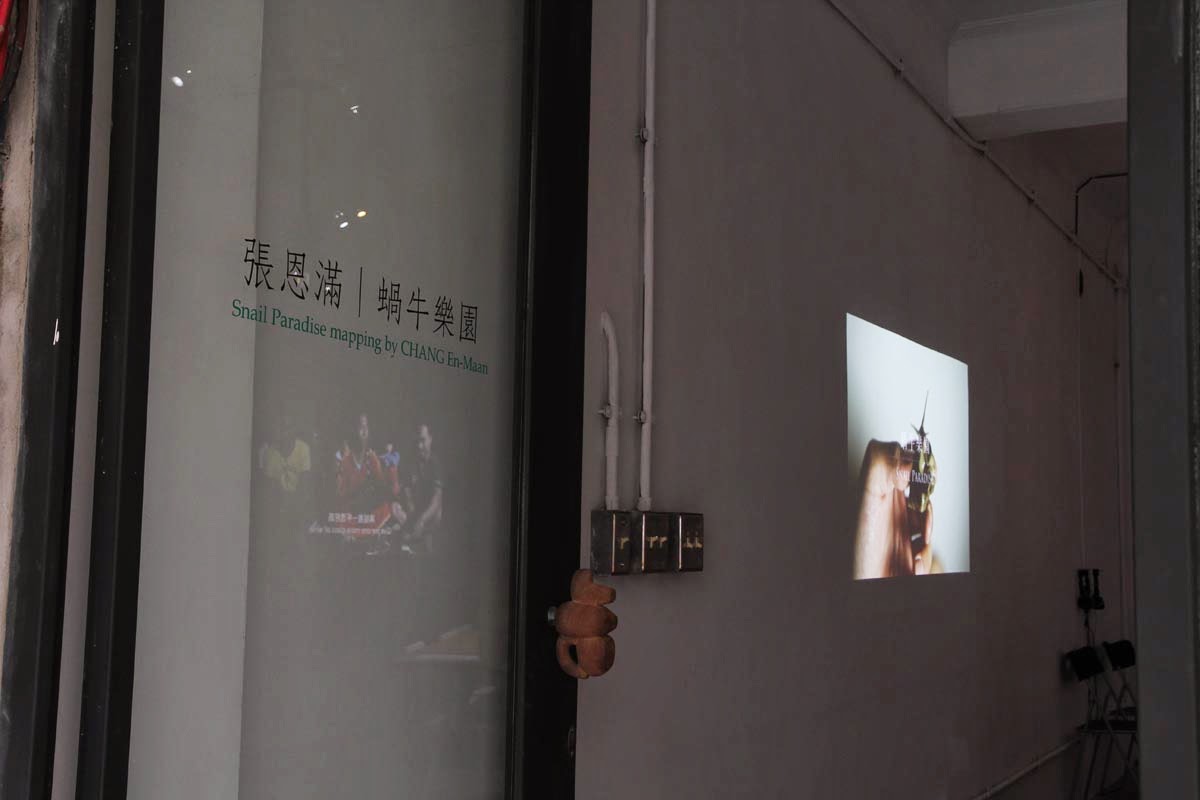
張恩滿│蝸牛樂園 Snail Paradise mapping by CHANG En-Man


台灣境內的蝸牛至少有兩百多種,而非洲大蝸牛這個外來物種,卻啟動了藝術家對這塊島土與身分認同的探尋旅程,它體內不斷分泌的黏液,在行走的途中留下痕跡,移動與書寫出一張張的心靈地圖;藉由回訪路徑去感受一個社會的地理紋理,企圖尋找出如食物鏈般的連結來描繪這個文化地景,繼續的去挖掘或披露生命裡更深層的黏稠關係。

歡迎光臨蝸牛樂園!

展場紀錄 Exhibition image record

Over two hundred kinds of snails exist in Taiwan, but the giant African snail, an alien species, triggered the artist to embark on a journey in exploring her self identity and geographical identification. Snails constantly secrete mucus, leaving traces wherever they move, allowing them to draw various mind maps through their specific mobility. By the returning visits to the aboriginal tribes and experiencing the social geographical texture of the locale, the artist attempts at mapping the complex food chain-like interconnections of the locality in order to portray its cultural landscape, and continues to unearth and disclose the deeper and viscous relationships in life.

Welcome to Snail Paradise!
--
Translated by : OCAC

2012年11月22日

競技場 Arena


2012年,影像,7' 51"
*本影像作品非經作者授權,不得任意轉載與公開播映。 Works without the author's authorization, shall not arbitrarily reprint and open broadcasting.

因為一部泰拳練習場紀錄片的引發,去進行一個探訪原住民部落的拳擊練習場的對話影像。像是藉由兩個地點的聯繫而進行的旅程,去簡單繪製一個社會的地理景觀;而競技場在某種­意義上來說像是個舞台,上演的是如何選擇生存的現實,想揭示的內容或隱或現,去等待似乎可想像的後續鋪陳。

"Arena", 2012, Video, 7' 51"
These are images from a documentary film of a Thai-boxing practice arena in Ching-Mai, forming dialogues to a boxing practice rink in an aboriginal tribe located at the foot of a mountain in southern Taiwan. Through the connection of the two locations, a simple social geographical spectacle is thus delineated. The boxing arenas are in a sense like performance stages, whereupon the live show we witness reflects the reality of survival and the audience becomes the authoritative viewers, offering the narrative and characters of the story fictional and realistic qualities.

網路公播活動 Facebook Premiere
https://www.facebook.com/events/520761247942664/


2012年10月6日

seeing@SiteLay 72影像創作工作坊發表展


seeing,是我們每日生活中的觀看行為,SiteLay 作為閩南語『西螺』的發音;site 的字義為地方、所在地或一特殊場域,lay 有放置、陳設或形容外行與世俗的意味。一些人群聚在這裡,他們大部分不是專業創作者的在地人仕,卻願意嘗試與挑戰這樣的影像創作計畫。在這裡,透過數位媒介的操作,去詮釋每位參展者所關注的,在所處相同的時空與熟悉的生活片斷中發掘觀點,拼湊出共同記憶裡的文化線索,運用不同觀看的角度,同構共鳴於光影書寫背後的知面,希望進行一種原初的、當下對攝影的認知,去直覺性展現參展者的視界、與我們分享的『觀看』。

誠如《觀看的實踐》一書指出「觀看」是一種實踐;而觀看的實踐表現在於「觀看是主動為這個世界製造意義」。

展場紀錄 Exhibition image record

2010年8月31日

願景:大鳥壁畫提案 Hope–A Wall Painting Proposal for Pacavalj Tribe


創作年代:2010
尺寸:依展出現場而異
媒材:基地模(180*270cm)、投影、影像輸出
展覽靜態紀錄連結

台東縣大武鄉大鳥村於88風災中土石嚴重坍方造成14戶民宅損壞,而被政府判定劃設特定區域,但在該村強力反對下獲得免於遷村的勝利,並由政府投入大筆經費進行水土防禦工程;風災某種程度也聚合了村民意識到部落文化傳承的重要,但當地歷史記錄做的並不完善,需要花時間追溯與統整。

於是在這裡有個社區壁畫提案,結合工程裡一個巨大的檔土牆去進行,繪畫內容便以大鳥村的尋根內容作為主題,以及屬於大鳥村本身的神話與傳說為主。模擬全村與山坡上擋土牆的縮小比例模型去做為一個在地溝通的介面,並提出壁畫提案草圖方便村民提供意見與修改內容,以集體記憶建構其地方詩學;別於刻板的部落入口印象,期望能進階進行屬於在地民眾的集體創作。

工程承載著全村村民永免於恐懼的願景,但各個沒把握,小小的安靜的村落又有著綿密的人事與政治糾葛,文化或創意在那裡可能僅為生存的考量。遠離熟悉的藝術圈外,藝術家以有限人力與資源如何天真的運行?以身為度測量著藝術在那兒如何的可能?這裡是一個中長期在地的流動計畫,模型作為探測器,承載著初步階段的重要任務,在台北論壇雙年展的展場中也成為外部(觀眾)投入資訊與意見的啟動之物。

作品描述

主要有一個底座約180x270cm的基地模,模型呈現的是大鳥村民聚落與檔土牆設施,壁畫草圖圖樣數張輪播投影在基地模上的檔土牆(現場已調整至明亮而有想像的白光),基地模底座崁入音響,播放排灣族語介紹這個提案(作品)。牆面有一些靜態攝影,影像內容為訪查許多原民部落一些佚名作品,它們多數出現在社區活動中心司令台,以寫實樸拙的手法呈現劇場式的繪畫或浮雕。拍攝採樣的範圍選取為台東南部相距約50公里進行88災區重建聯動計畫而相互串聯的幾個部落(包含大鳥部落)。


Hope – A Wall Painting Proposal for Pacavalj Tribe
2010
Dimensions variable
Architecture models, projection, photography

The deadly landsides during Typhoon Morakot on August 8, 2009, destroyed 14 homes in Taniao Village in Tawu Rural Township, Taitung County. Although the area was then designated a special zone by the government, the villagers strongly opposed plans to relocate them. In light of this, it was decided to invest in flood and landslide control work to make the living environment safer. The typhoon also caused villagers to reflect on and recognize the importance of their unique tribal culture and heritage. However, local historical records were far from comprehensive, so tracing and organizing that work took time.

This community mural project is part of a larger program to build a huge retaining wall. The paintings used to decorate the wall are to be based on Taniao villagers’ search for their roots and the various myths and legends associated with the village itself. The work started with a scale model representation of the village and the retaining wall on the mountainside as an interface for local communication. It also provided virtual drafts of the mural for villages to view and express their own ideas, with revisions to be included in the final work. It is hoped that this approach infuses the final product with a community or collective identity. This project was of particular importance to the village because it represented a vision of the future in which they could live without fearing for their lives every time a typhoon approaches.

However, even a small, peaceful village such as this has its own complex personal relationships and politics, so we first had to consider whether it was even possible for culture to coexist with innovation in such an environment. Besides being far removed from the art world, how was an artist to proceed with such limited manpower and resources? Clearly the artist needed to determine in person whether art was feasible in such a location. This particular project is a medium to long term program and as such, the model plays an extremely important role in the initial planning period. It serves as a focal point at discussion forums, allowing members to be informed about the nature of the project whilst also encouraging villagers to voice their opinions.

Work Description

There is an approximately 100x150cm base site model. Because the content of the wall painting could change as a result of field surveys in the area, several possibilities will be projected onto the retaining wall, on the site model. The base of this model has its own embedded speaker system which will play recordings of local children telling stories about Taniao Village in the local Paiwan language.

The wall is decorated with photographs, examples of anonymous works collected from various aboriginal villages, many of which previously appeared on the stage at community activity centers. Their simple and realistic depictions showcase theatrical type paintings or sculptures. These photographs were collected from villages (including the Taniao Village) in southern Taitung with in a 50km radius, connected through the 88 Disaster Reconstruction Joint Program. (Translated by Andrew Wilson.)

2010年5月1日

尋找記者保羅


單頻道錄像,14'05",2010

2009年8月8日莫拉克颱風重創台灣,那陣子電視新聞全都是各地傳來的災情,24小時不斷行進的一片慘狀的畫面裡,有一則報導特別吸引了我的注意:東部的大武鄉對外道路全部中斷儼如孤島,一位因奔喪返鄉而受困的居民,在那孤立無援的幾天苦中作樂的模仿電視台記者SNG連線報導,拍攝當地多支災情紀錄影片,幾天後才經由電視剪輯畫面傳送。
從新聞媒體得知那位自稱保羅的”記者”,年紀跟我差不多一樣大,而且拍攝的地方就是我出生的地方,於是開始了一些想像,或許我跟他會有些什麼關係,我獨自回到這個陌生的地方,沿著他影片中所透露的線索,開始尋找……。