《蝸牛料理影音訪談計畫-台九線篇》選取台九線東部南迴段範圍成為主要的探訪取徑,並藉由這個路徑去感受一個社會的地理紋理,試圖尋找出如食物鏈般的連結來描繪這個文化地景。
台九線路段,對許多人來說,除了火車,它就是唯一一條能回家的道路;而蝸牛料理在這條路上,如何去提示生活記憶的味道?如何在這條線/鏈上串聯出與『家』的共同感受?
在這個計畫裡,邀請部落族人以蝸牛為主食材,為我們演繹許多在地料理,通過其中的訪談對話,開啟與介紹不同面向的文化味蕾,繼續的去挖掘或披露生命裡更深層的黏稠關係。
From city to countryside, body is moving along route like a detector. The plan covered the south part of the Provincial Highway No. 9 on the east coast of Taiwan. I tried to find the connections through the route and turned them into depiction of the cultural landscape and social scenes with cuisines and record.
Provincial Highway No.9 is the only way to go home in addition to railway. This is also the route I took to explore the island and the cultural identification, while picturing ‘home’ as if a wanderer.
In this interview program, I invited the people from the aboriginal village to show the snail dishes. Meantime, I hope to introduce their unique culture and the connections with life via the interviews and conversations.
2013年6月29日
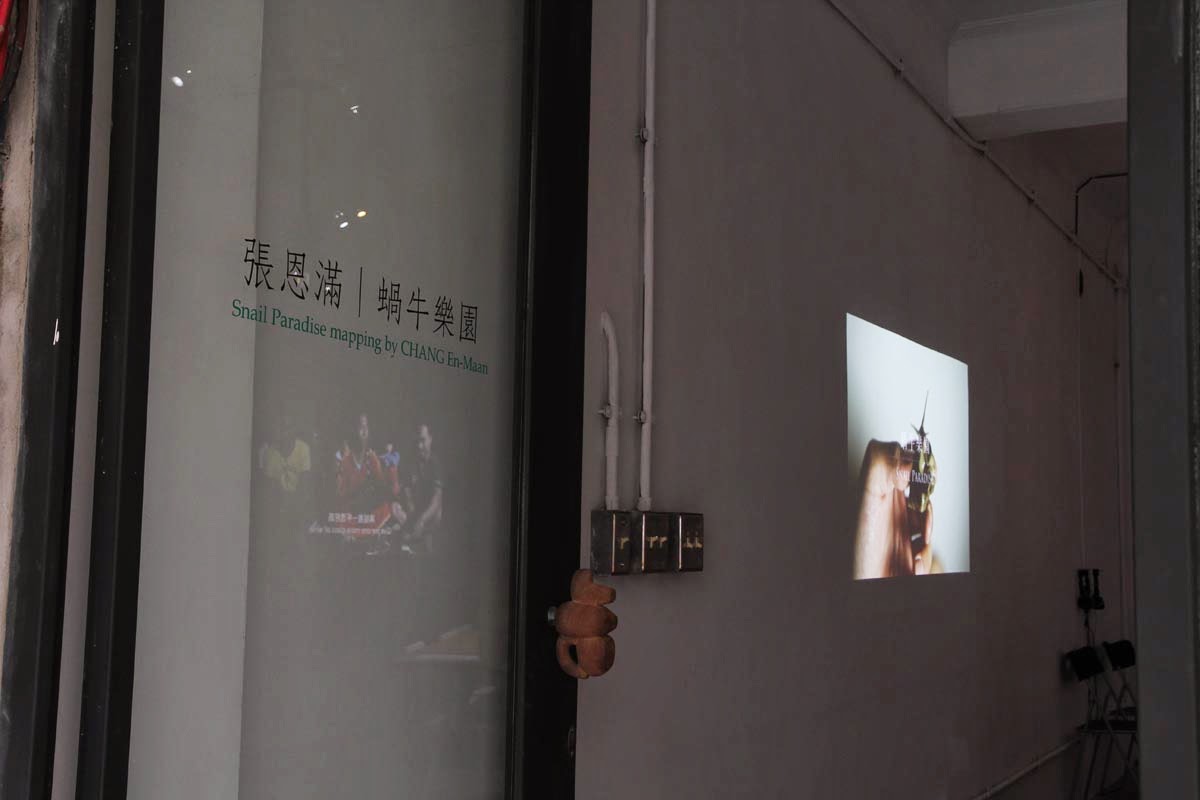
張恩滿│蝸牛樂園 Snail Paradise mapping by CHANG En-Man
台灣境內的蝸牛至少有兩百多種,而非洲大蝸牛這個外來物種,卻啟動了藝術家對這塊島土與身分認同的探尋旅程,它體內不斷分泌的黏液,在行走的途中留下痕跡,移動與書寫出一張張的心靈地圖;藉由回訪路徑去感受一個社會的地理紋理,企圖尋找出如食物鏈般的連結來描繪這個文化地景,繼續的去挖掘或披露生命裡更深層的黏稠關係。
歡迎光臨蝸牛樂園!
展場紀錄 Exhibition image record
Over two hundred kinds of snails exist in Taiwan, but the giant African snail, an alien species, triggered the artist to embark on a journey in exploring her self identity and geographical identification. Snails constantly secrete mucus, leaving traces wherever they move, allowing them to draw various mind maps through their specific mobility. By the returning visits to the aboriginal tribes and experiencing the social geographical texture of the locale, the artist attempts at mapping the complex food chain-like interconnections of the locality in order to portray its cultural landscape, and continues to unearth and disclose the deeper and viscous relationships in life.
Welcome to Snail Paradise!
--
Translated by : OCAC
2012年11月22日
競技場 Arena
2012年,影像,7' 51"
*本影像作品非經作者授權,不得任意轉載與公開播映。
Works without the author's authorization, shall not arbitrarily reprint and open broadcasting.
因為一部泰拳練習場紀錄片的引發,去進行一個探訪原住民部落的拳擊練習場的對話影像。像是藉由兩個地點的聯繫而進行的旅程,去簡單繪製一個社會的地理景觀;而競技場在某種意義上來說像是個舞台,上演的是如何選擇生存的現實,想揭示的內容或隱或現,去等待似乎可想像的後續鋪陳。
"Arena", 2012, Video, 7' 51"
These are images from a documentary film of a Thai-boxing practice arena in Ching-Mai, forming dialogues to a boxing practice rink in an aboriginal tribe located at the foot of a mountain in southern Taiwan. Through the connection of the two locations, a simple social geographical spectacle is thus delineated. The boxing arenas are in a sense like performance stages, whereupon the live show we witness reflects the reality of survival and the audience becomes the authoritative viewers, offering the narrative and characters of the story fictional and realistic qualities.
網路公播活動 Facebook Premiere
https://www.facebook.com/events/520761247942664/2012年10月6日
seeing@SiteLay 72影像創作工作坊發表展
seeing,是我們每日生活中的觀看行為,SiteLay 作為閩南語『西螺』的發音;site 的字義為地方、所在地或一特殊場域,lay 有放置、陳設或形容外行與世俗的意味。一些人群聚在這裡,他們大部分不是專業創作者的在地人仕,卻願意嘗試與挑戰這樣的影像創作計畫。在這裡,透過數位媒介的操作,去詮釋每位參展者所關注的,在所處相同的時空與熟悉的生活片斷中發掘觀點,拼湊出共同記憶裡的文化線索,運用不同觀看的角度,同構共鳴於光影書寫背後的知面,希望進行一種原初的、當下對攝影的認知,去直覺性展現參展者的視界、與我們分享的『觀看』。
誠如《觀看的實踐》一書指出「觀看」是一種實踐;而觀看的實踐表現在於「觀看是主動為這個世界製造意義」。
│展場紀錄 Exhibition image record│
2012年4月14日
32根燈管
尺寸:依場地
媒材:日光燈管,限定空間,20051021-20060321(時間材料)
創作年代:2012
展出於:19991221>20130421 | PART ONE,打開當代藝術工作站,2012.4.14-5.13
展覽紀錄連結
│本事
「19991221 > 20130421 | PART ONE」為打開-當代藝術工作站(以下簡稱打開)位於城中藝術街區進駐空間的最後一檔展覽,把打開
│自述
我在這個展覽計畫中,被分配到的時間段落為20051021-20060321,那時我大一。你無法想像一個有點年紀的藝術愛好者,剛踏入某種可以讓你確立進入了藝術圈時的那種新鮮與興奮感;我誠實的回應了這個時間材料:那一道道炫目冷調的光芒,並且在未來與回到過去間穿梭。
相對於分配到被戲稱「蟑螂間」的空間,它一直是這個藝術空間的邊陲,總是被堆放雜物、晦暗髒亂的地方,有幾個展覽甚至將它封閉起來。我決定不對這個空間作任何改變,只藉由32根燈管去展現它原有的樣子,也是我對共同參與的32位藝術家盡全力使這個地方綻放最後「美麗」的致敬。
2012年1月5日
2012年1月1日
「一間小屋;」張恩滿創作發表
展場紀錄
開幕趴篇
│地點:台東縣大武鄉大鳥村308號
│展期:2011/12/23~2012/12/26
「一間小屋」裡,藝術家歷經半年的蹲點生活與有機性的開創工作,在使用權交還給部落族人前,舉辦了「不是離開而是延續之歡樂派對」,於2011年聖誕節與部落溫馨共渡。
在2009年個展「展一間;」陳述了一種對於空間與家的想望,現實中的混亂也從自身延伸到展場;2011年「一間小屋」是前述慾望的還魂,而那個混亂也從台北到了台東;藝術家孤獨薄弱的身體作為探測器,測量出這個場域的架構與生態。在這裡,「一間小屋」不是一個固定地點或一個固有建物,它代表的是一個想像的投射與奮力的實踐,即使失敗也產生出那個價值與意義。
-- 將來,我期待以不同方式,仍舊是詩意的回到這裡。
2011年12月10日
回家 III ( Go Home III )

創作年代:2011
尺寸:約8分鐘
媒材:Performance Art
展演紀錄連結(靜態)
展演紀錄連結(影片)
【展演資訊】
2011 TIPAF–Theater Piece III
日期:2011.12.3
地點:牯嶺街小劇場,台北。
布條是多麼的普遍代表文化建設的最初與最終績效;
部落的青年是多麼渾然天成的優秀,砸奶油派又是多麼令人歡娛。
藝術家的身體成為工具,也真實且殘忍的,
反射出這個文化政策制度的架構與生態。
看看輕薄的蚊帳,怎麼樣也成不了一個家的事實。


2011年10月9日
回家II ( Go Home II )

圖源:ARTinNATURE
創作年代:2011
尺寸:約15分鐘
媒材:Performance Art
展演紀錄連結(靜態)
展演紀錄連結(影片)
【展演資訊】
2011 International Performance Art In Busan
日期:2011.10.9
地點:Busan Station, Busan, Korea.
驛站作為承載離家或回家的中繼空間,人群中游離的身體是否可以自成一個家?
使用輕薄、透明的便利蚊帳,像是自欺欺人般的擬仿了一個居家空間,並書寫了一封不確定投遞與否的信,想藉由那些內在或外在的舉動,去補償某種安全感。

2011年6月17日
回家I ( Go Home I )

photo by HSU PINE
創作年代:2011
尺寸:約15分鐘
媒材:Performance Art
展演紀錄連結
【展演資訊】
七股護沙行動
日期:2011.6.17
地點:頂頭額汕沙洲,台南
沙洲不斷流失沙,人們拼命留住沙。
在沙洲上挖了一個坑,也因海水不斷灌注引導沙不斷的崩落,怎樣也成不了一個坑。
用輕紗與漂流木粗構一個家屋的雛型,身體躺在這個雛型環繞的淺漥,有如優游在母親羊水中。
2011年5月25日
一間小屋;
一間小屋的紀錄網站:http://pacavalj-shouse.blogspot.tw/
2011年5月5日
狼煙榖雨祈福行動

圖源:方言藝術空間
創作年代:2011
尺寸:約20分鐘
媒材:Performance Art
展演紀錄連結
【展演資訊】
谷雨行動第五回
日期:2011.4.25
地點:水泉山莊,西安
台灣原住民族的「狼煙」是部落傳遞訊息的方式,或有目的訴求的媒介物 。引用「狼煙」施作地點位於大陸西安東郊洪慶山農家樂,那兒是一個因應社會急速城市化後,農業作為經濟政策推動休閒產業的地方,一個被劃為國家風景區明令禁火的場所,卻隨處可見如房子般高的柴堆;身處於大陸農地去思考著「狼煙」的意義,以及以土地為生的人民與政府的關係。
這是一個在想像中去開展冒險的旅程,由曾接收到的訊息感受到某種禁忌,懷著目的去摸索與探測地表的緊張身體,劃出從台灣到大陸的一個游標物位移路徑。過程中愛(艾)與Ui(未)的出現,其字音與淺顯字義在這裡成為一個象徵或符號,通過拙劣的巫師把戲去壓蓋與失控對應前者。最後發放裝著紅色染料的小噴壺,想陷參與者之手於難以清洗的不義之中。
標籤:
台灣原住民族,
計畫,
狼煙,
event,
Performance
2011年4月30日
2010年10月18日
現打蝸牛 Fresh Snail
2010,臨場藝術,20分鐘。展演於「身體與食物」,鳳甲美術館,台北
身體行為處於類似料理節目的場景,並非意圖集合食材,去作為一個線性完成的流程,而是處理一個主要食材的思考。「現打蝸牛」一詞來自台灣東部省道旁常見的招牌,「現打」取自台語「現殺」的意思,意指保證食材新鮮可口。而蝸牛這個外來種,現打之後,體內有著滑稠且難以處理的黏液。這個特殊的黏稠介質,除了串連起了藝術家對於從小離異的母親之記憶,還擴及至這個蝸牛物種與台灣土地的關係。
"Fresh Snail", Live Art , 2010, 20 mins.
"Live Art: Body and Food", Hong-Gah Museum, Taipei.
One of the main ingredients of thought processing.
Snail often appear in eastern Taiwan restaurant, on-site crushing snails is a big selling point for processing, ensuring its freshness.
And this alien snail, the body thick and difficult to deal with slippery mucus.
This special viscous media, in addition to serial divorced from the artist's childhood memory of mothers, but also extend to the land snail species, the relationship with Taiwan.
2010年8月31日
願景:大鳥壁畫提案 Hope–A Wall Painting Proposal for Pacavalj Tribe

創作年代:2010
尺寸:依展出現場而異
媒材:基地模(180*270cm)、投影、影像輸出
展覽靜態紀錄連結
台東縣大武鄉大鳥村於88風災中土石嚴重坍方造成14戶民宅損壞,而被政府判定劃設特定區域,但在該村強力反對下獲得免於遷村的勝利,並由政府投入大筆經費進行水土防禦工程;風災某種程度也聚合了村民意識到部落文化傳承的重要,但當地歷史記錄做的並不完善,需要花時間追溯與統整。
於是在這裡有個社區壁畫提案,結合工程裡一個巨大的檔土牆去進行,繪畫內容便以大鳥村的尋根內容作為主題,以及屬於大鳥村本身的神話與傳說為主。模擬全村與山坡上擋土牆的縮小比例模型去做為一個在地溝通的介面,並提出壁畫提案草圖方便村民提供意見與修改內容,以集體記憶建構其地方詩學;別於刻板的部落入口印象,期望能進階進行屬於在地民眾的集體創作。
工程承載著全村村民永免於恐懼的願景,但各個沒把握,小小的安靜的村落又有著綿密的人事與政治糾葛,文化或創意在那裡可能僅為生存的考量。遠離熟悉的藝術圈外,藝術家以有限人力與資源如何天真的運行?以身為度測量著藝術在那兒如何的可能?這裡是一個中長期在地的流動計畫,模型作為探測器,承載著初步階段的重要任務,在台北論壇雙年展的展場中也成為外部(觀眾)投入資訊與意見的啟動之物。
作品描述
主要有一個底座約180x270cm的基地模,模型呈現的是大鳥村民聚落與檔土牆設施,壁畫草圖圖樣數張輪播投影在基地模上的檔土牆(現場已調整至明亮而有想像的白光),基地模底座崁入音響,播放排灣族語介紹這個提案(作品)。牆面有一些靜態攝影,影像內容為訪查許多原民部落一些佚名作品,它們多數出現在社區活動中心司令台,以寫實樸拙的手法呈現劇場式的繪畫或浮雕。拍攝採樣的範圍選取為台東南部相距約50公里進行88災區重建聯動計畫而相互串聯的幾個部落(包含大鳥部落)。
Hope – A Wall Painting Proposal for Pacavalj Tribe
2010
Dimensions variable
Architecture models, projection, photography
The deadly landsides during Typhoon Morakot on August 8, 2009, destroyed 14 homes in Taniao Village in Tawu Rural Township, Taitung County. Although the area was then designated a special zone by the government, the villagers strongly opposed plans to relocate them. In light of this, it was decided to invest in flood and landslide control work to make the living environment safer. The typhoon also caused villagers to reflect on and recognize the importance of their unique tribal culture and heritage. However, local historical records were far from comprehensive, so tracing and organizing that work took time.
This community mural project is part of a larger program to build a huge retaining wall. The paintings used to decorate the wall are to be based on Taniao villagers’ search for their roots and the various myths and legends associated with the village itself. The work started with a scale model representation of the village and the retaining wall on the mountainside as an interface for local communication. It also provided virtual drafts of the mural for villages to view and express their own ideas, with revisions to be included in the final work. It is hoped that this approach infuses the final product with a community or collective identity. This project was of particular importance to the village because it represented a vision of the future in which they could live without fearing for their lives every time a typhoon approaches.
However, even a small, peaceful village such as this has its own complex personal relationships and politics, so we first had to consider whether it was even possible for culture to coexist with innovation in such an environment. Besides being far removed from the art world, how was an artist to proceed with such limited manpower and resources? Clearly the artist needed to determine in person whether art was feasible in such a location. This particular project is a medium to long term program and as such, the model plays an extremely important role in the initial planning period. It serves as a focal point at discussion forums, allowing members to be informed about the nature of the project whilst also encouraging villagers to voice their opinions.
Work Description
There is an approximately 100x150cm base site model. Because the content of the wall painting could change as a result of field surveys in the area, several possibilities will be projected onto the retaining wall, on the site model. The base of this model has its own embedded speaker system which will play recordings of local children telling stories about Taniao Village in the local Paiwan language.
The wall is decorated with photographs, examples of anonymous works collected from various aboriginal villages, many of which previously appeared on the stage at community activity centers. Their simple and realistic depictions showcase theatrical type paintings or sculptures. These photographs were collected from villages (including the Taniao Village) in southern Taitung with in a 50km radius, connected through the 88 Disaster Reconstruction Joint Program. (Translated by Andrew Wilson.)
訂閱:
意見 (Atom)