The Happy Mountain is, by all practical accounts, invisible. Located around a seaside highway in northeast Taiwan, Happy Mountain doesn't have any visible mapping points. The people who live there are primarily elders of Amis (Pangcah), cohabiting with the natural environment and sustainably living off the rich resources found between the sea and mountains. They subsist off collecting wild vegetables and seafood, as well as building different types homes by collecting recycled construction materials for the last thirty years.
In Taiwan, many of the urban indigenous tribes are dotted around suburban areas of cities. The typical reason they came to live in these suburban areas —away from their hometowns such as Hualien and Taitung— was to make a better living wage as manual laborers, namely off of the early boom in urban construction. Due to nostalgia and homesickness, these laborers gradually started to gather, one by one, in Happy Mountain due to its geographical similarity with their hometowns.
This type of movement is not unlike how their ancestors began to gather and live together in the past, forced on by the continued development of their country by outside occupation. After those major early develops waned in Taiwan, the land was no longer seen as belonging to these migrant laborers. Instead, the land came into the possession of the government and became just another piece of capital. Therefore, these laborers have now been deemed illegal occupants, treated without the proper respect, for their sacrifices and years of hard work for the collective good of Taiwan. As it stands today, every resident who make The Happy Mountain their home are being accused of illegally occupying National property and face losing the place they worked so hard to call home.
From the outside looking in, Happy Mountain seems like a utopian space, complete with a rare balance found in other parts of Taiwan, that being a harmony and peace within the dedication to sustainability. If anything, the hard work of these people have made it more attractive to outsiders, who now envy and look forward to living there.
En Man's entry into this space was to simply explore this area, soon finding a mysterious house of glass abandoned on the high point of mountain, shrouded within a foggy political atmosphere. En Man uses this kind of loose exploration in order to gradually and unpretentiously build experiences tied to this mountain area and, in so doing, try to recognize and understand the process of mapping from outside to inside, as if looking for the path to some form of hometown.
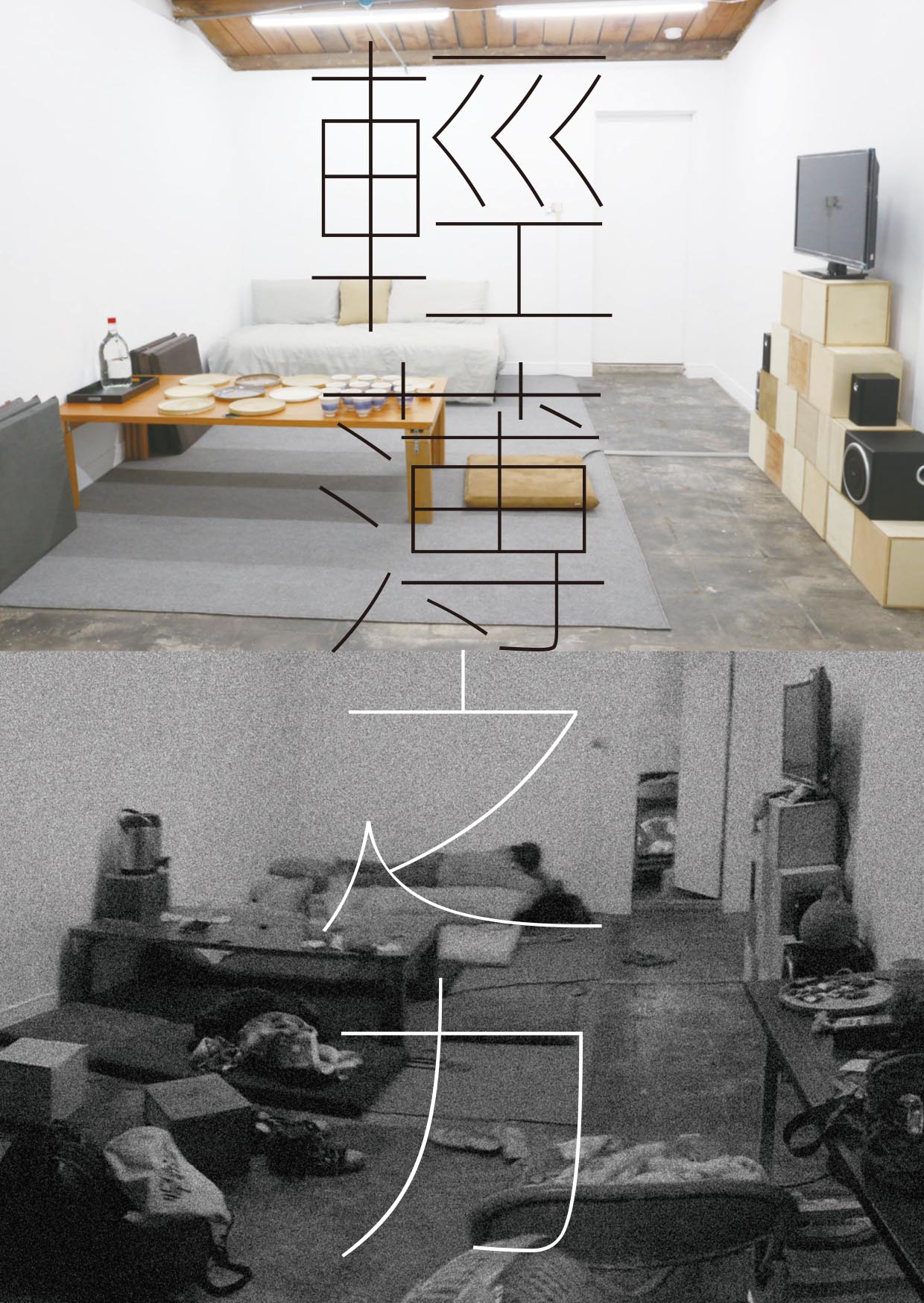
In 2008, a group of people got to know each other on the occasion of Wild Strawberries Movement. In 2009, they collaborated to run the Go Straight Café as an experimental and open space for the purpose of organizing a community and taking actions. 2012, Go Straight Café closed down. Since then, individuals drifted from one café to another, sitting on unfamiliar sofas till they met each other again. In 2014, Halfway Café hit the road.
Halfway Café is a project as well as a platform for those who lost in directions or languages finding their own place. In order to continue creating publicness, Halfway made an analogy of itself and a country and develops four political routes: currency, mutual aids wall, farming and night canteen.
Above all, Halfway Night Canteen bases on a concept of “a store with another store”(a country inside another country) and puts individual/public self-governance into practice. From Monday to Sunday, a chef of each day cooks thematic meals related to their background in-store. Here, food is a medium for delivering beliefs. It can activate any possibilities and even revolutions. It discloses values that we choose to survive.
a publishing project
En Maan Chang was fascinated by Halfway. She explored the proposed a collaboration. Firstly, she became resident-chef in Halfway Night canteen and got to know the community and the space better. She lately interviewed night canteen chefs and edited it for publishing a trial issue of Halfway Night Recipes in order to understand an individual/collective’s attitude, knowledge, experiences as well as the culture and political position behind. Her intention was to picture a networking and portray a community conscious and even a collective consciousness of utopia.
2014, video, 31' 40"
The term “decriminalization” refers to a situation where a previously illegal activity or action is designated legal. When legal behavior is suddenly reclassified as illegal, that is called “criminalization.” In a civilized society, how is it that the traditional hunting of indigenous peoples results in them being subject to the legal system of a different culture? In the past, hunters were the pride of the tribe, but they are now labeled criminals by the legal system because the prevailing political-economic system declines to respect cultural diversity. By focusing on one example and creating a work , the artist identifies this phenomenon and highlights the contradictory nature of existing law. ( Translation by TB2014)
taqetaq, digital print with lightbox, 15x20cm, 90x65cm, 2014.
"Hey friend, don’t be so rush! Please
put your button down, having a seat for a while here!"
The sentence above is the meaning of
taqetaq in Payuan, language of Paiwan. Taqetaq is also an arbor made in very simple
structure. This kind of architecture for a short time docking contains
traditional meaning and functions in different Taiwan indigenous culture. For example,
functions of invitation, sharing, or communication. Since in the tribal
society, which has been modernized, the form of architecture last now reflects
the mental space of people.
--
Translated by :Yi-Cheng Sun 攝影 Photographer: (L) Varanuvan Mavaliw,
(S) Kalesekes Ljakadjaljavan.
From city to countryside, body is moving along route like a detector. The plan covered the south part of the Provincial Highway No. 9 on the east coast of Taiwan. I tried to find the connections through the route and turned them into depiction of the cultural landscape and social scenes with cuisines and record.
Provincial Highway No.9 is the only way to go home in addition to railway. This is also the route I took to explore the island and the cultural identification, while picturing ‘home’ as if a wanderer.
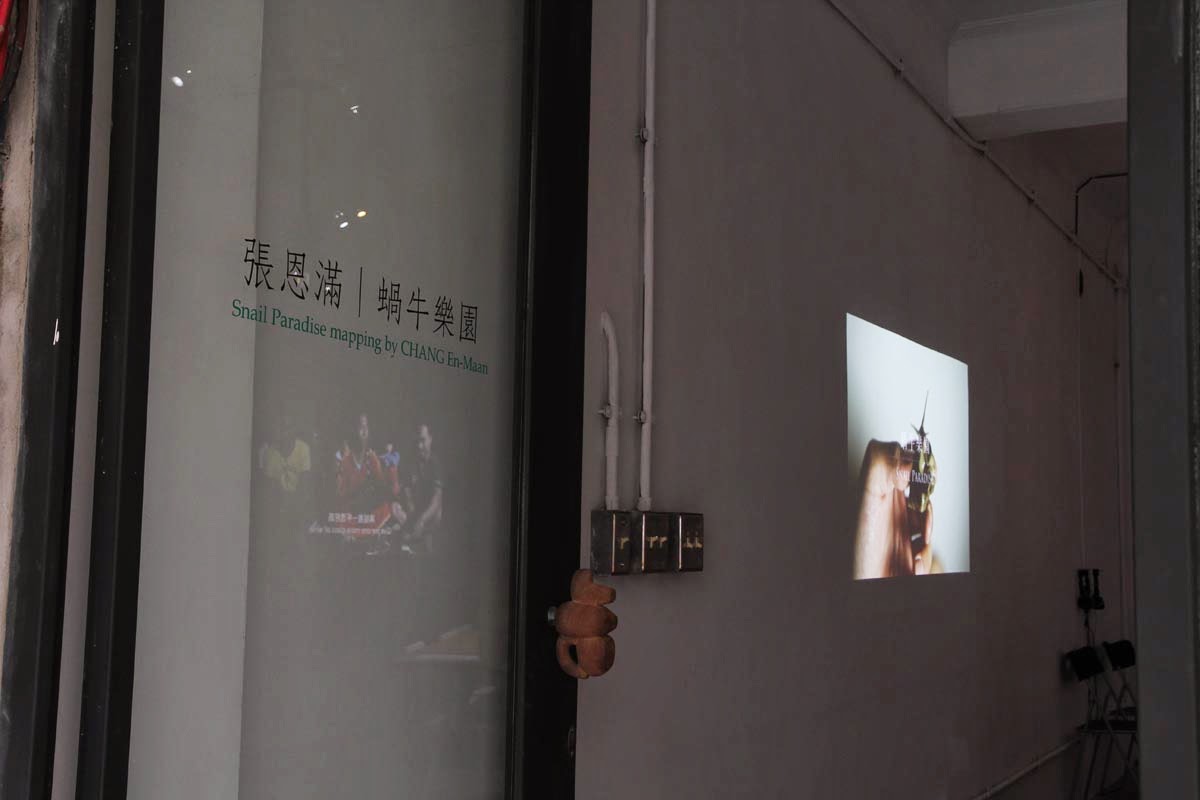
In this interview program, I invited the people from the aboriginal village to show the snail dishes. Meantime, I hope to introduce their unique culture and the connections with life via the interviews and conversations.
Over two hundred kinds of snails exist in Taiwan, but the giant African snail, an alien species, triggered the artist to embark on a journey in exploring her self identity and geographical identification. Snails constantly secrete mucus, leaving traces wherever they move, allowing them to draw various mind maps through their specific mobility. By the returning visits to the aboriginal tribes and experiencing the social geographical texture of the locale, the artist attempts at mapping the complex food chain-like interconnections of the locality in order to portray its cultural landscape, and continues to unearth and disclose the deeper and viscous relationships in life.
Welcome to Snail Paradise!
--
Translated by : OCAC
These are images from a documentary film of a Thai-boxing practice arena in Ching-Mai, forming dialogues to a boxing practice rink in an aboriginal tribe located at the foot of a mountain in southern Taiwan. Through the connection of the two locations, a simple social geographical spectacle is thus delineated. The boxing arenas are in a sense like performance stages, whereupon the live show we witness reflects the reality of survival and the audience becomes the authoritative viewers, offering the narrative and characters of the story fictional and realistic qualities.